Britain · UK Today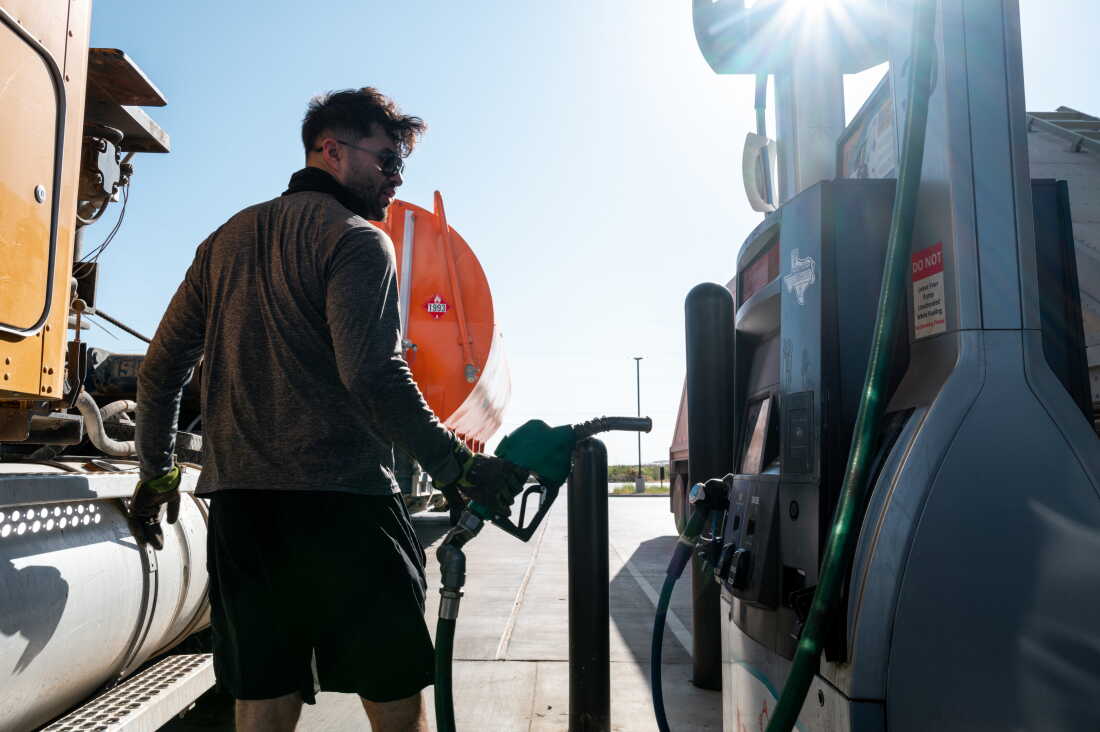
A person prepares to refuel their semi-truck on August 13, 2026 in Nortrees, Texas. Diesel prices continue to climb due to international conflicts disrupting the global fuel supply chain. Tensions involving Iran have severely disrupted shipping through the Strait of Hormuz, while Ukrainian attacks on Russian refineries have further strained fuel exports.
The price of diesel has reached an all-time high, with the national average for a gallon now at $5.85, the highest since June 2022 when it was $5.81. Patrick De Haan, petroleum analyst at GasBuddy, notes that diesel powers much of the industrial supply chain in the U.S. via the 'three t's'—trains, tractors, and trucks. A gallon of diesel cost $3.76 before the Iran war, and it has since risen by over $2.
De Haan explains that increased diesel costs will trickle down into farming, food prices, and transportation costs. About 90% of the nation's school buses run on diesel, impacting school district budgets. Inflation has been up 3.4% over the past year, with energy prices contributing significantly.
Since the Iran war began in late February, petroleum product prices have risen, limiting flow through the Strait of Hormuz. Asian refineries have also limited diesel exports, and Ukraine’s attacks on Russian refineries have caused Russia to curtail diesel exports, importing fuel from countries like India, Kazakhstan, and Belarus. Refiners in the U.S. have prioritized producing more jet fuel due to higher prices, reducing diesel supply.
Diesel is crucial for industrial logistics, powering goods and agricultural products. Seasonal factors, such as the harvest season and heating needs, may keep diesel prices elevated. About 75% of agricultural equipment runs on diesel, and heating oil prices often correlate with diesel costs.
Source: NPR